Code must be free.
Free to inspect, use, change and share. Not a demand that developers work unpaid. Users deserve to know what they are getting. A polished interface is not enough.
We learn from each other
Development should not mean solving the same problems in isolation. Reading an implementation, following a bug report and studying a fix teach things a product demo cannot.
Open source makes that knowledge reusable. A contribution can improve the original project. A fork can take it in another direction. The next developer does not have to start from zero.
For me, transparency means readable source, a clear license and build instructions. Publicly visible code alone is not enough: open source also grants rights to modify and redistribute it. It does not guarantee security. It makes independent inspection possible.
Four of my favorite projects
Vercel's browser automation CLI for AI agents. Agents can inspect pages, interact with elements and capture screenshots. I want the tools acting inside a browser to be inspectable too.
Voice-to-text for macOS with local transcription. Its source is available under GPLv3. Optional cloud enhancement sends transcribed text to a provider—an important distinction when discussing privacy.

An open-source coding agent that supports different model providers. That separation matters: I want to choose my coding environment independently of the company supplying the model.
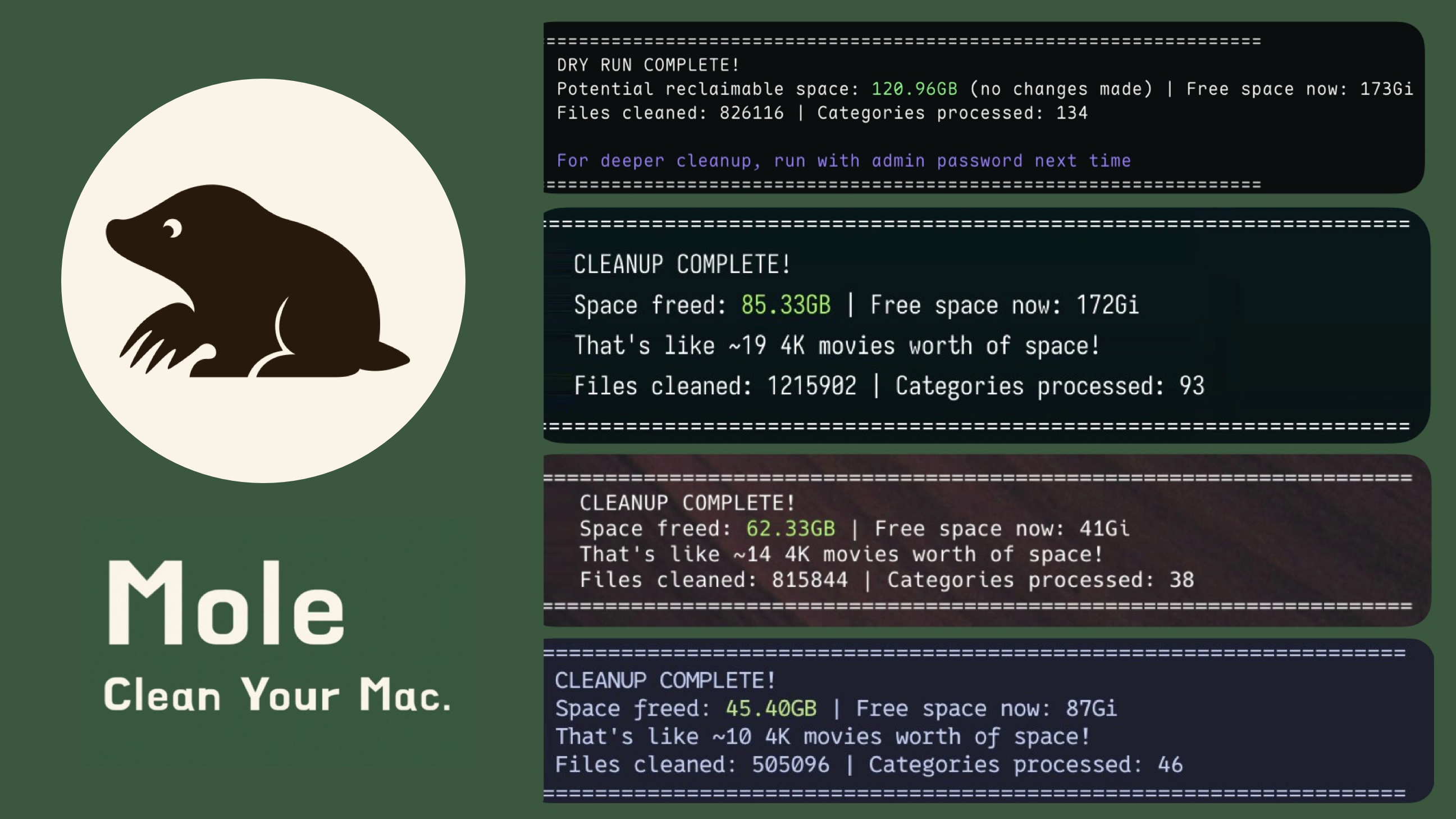
Mac cleanup, disk analysis and system monitoring. I mean the open-source CLI here, not the separate paid Mac app. Source visibility matters especially when software can delete files.
Open-source software is not the same as open weights
An open-source coding app can still use a closed model. Open weights means access to a model's learned parameters; those numbers are not a readable explanation of its decisions.
The Open Source Initiative's AI definition goes further: appropriate freedoms, model parameters, complete training and inference code, and sufficient information about the training data. Downloadable weights alone do not establish that.
Open weights still matter. They make independent evaluation, adaptation and self-hosting possible within the release's license. But we should say what is actually available.
The models I care about
GLM: especially GLM-5.3-Flash
Z.ai's GLM-5.3-Flash is one of my favorites. Its documented design combines text and vision, 320 billion total parameters, 18 billion active parameters, and sparse plus linear attention to improve long-context efficiency.
The important part for me is that developers can work with published weights and implementations—not just call a remote API. We can test the model against our own code and investigate its failures.
DeepSeek V4.1
Another favorite is DeepSeek-V4.1-Flash, the published V4.1 release. It provides MIT-licensed weights, inference code and evaluation instructions. Its cache-compression work addresses memory costs in long agent sessions. Publishing the implementation makes those engineering choices available for others to examine and build on.
Qwen
Qwen3.5-9B is a concrete example: downloadable text-and-vision weights under Apache 2.0, in a smaller model than the large GLM and DeepSeek releases above. That gives developers another option for local experiments and task-specific evaluation. Check the exact checkpoint, not just the family name.
Kimi
Moonshot's Kimi K2.5 publishes weights and code for multimodal, tool-using workflows. Its Modified MIT license adds a condition: commercial products exceeding 100 million monthly active users or US$20 million in monthly revenue must prominently display “Kimi K2.5” in their interface. Calling that simply “MIT” would hide a real difference.
Open weights still need suitable hardware. “18 billion active” does not mean an 18-billion-parameter download. Access and affordability are separate questions.
Free code does not mean free labor
I support charging for hosting, support and convenient builds. I also support paying maintainers. The freedom to inspect and improve software should survive the purchase.
We learn from each other. I want the next person to be able to learn from my code, not just use the result.
Model and project details checked on September 21, 2026. The named checkpoints are examples, not a claim that every release in each family has identical terms.